


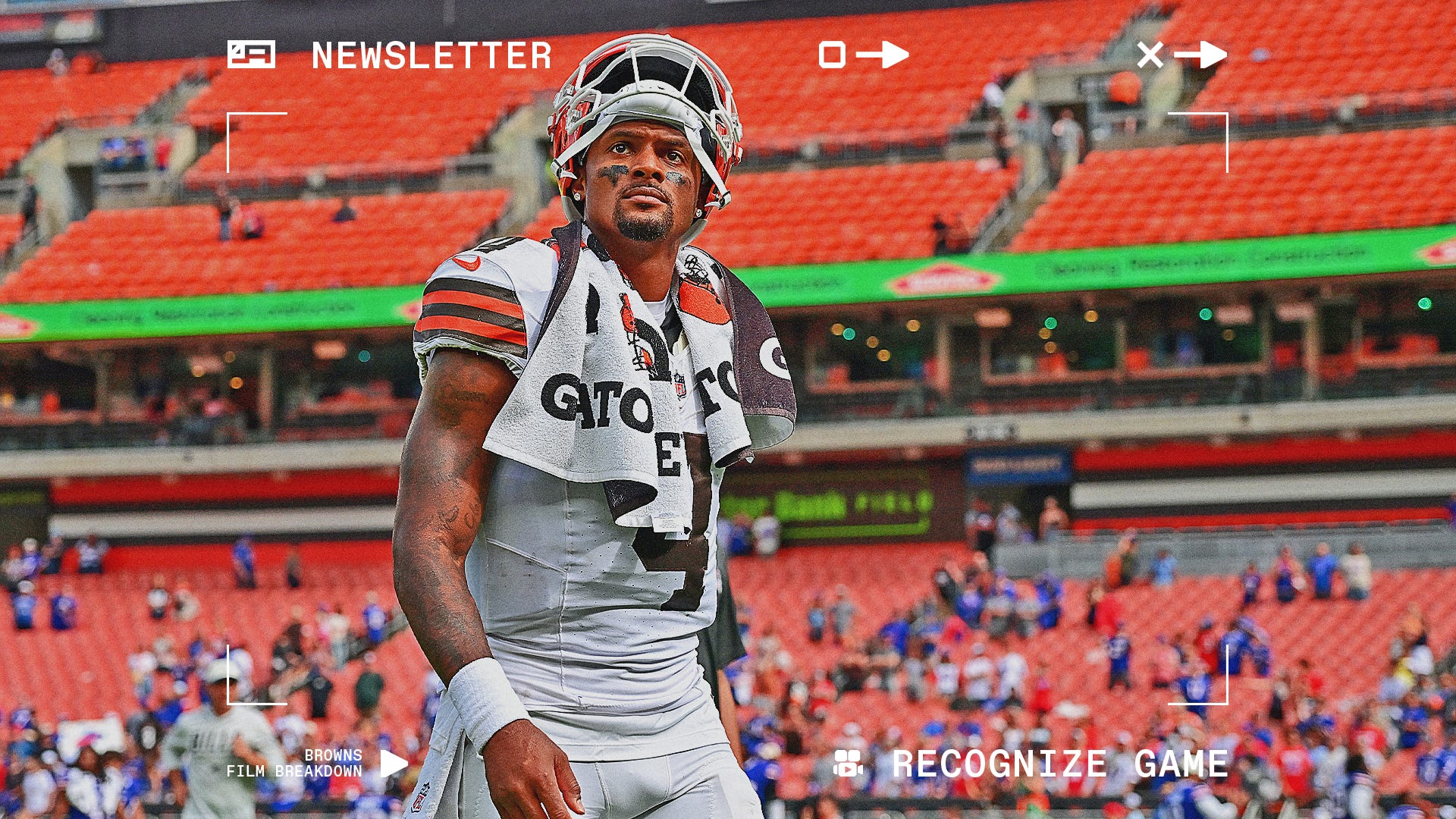
Deshaun Watson didn’t lose the Browns’ quarterback competition on Saturday with his arm. He went 5 of 12 for 36 yards and threw an interception in his scheduled time during the second half of a 31-7 preseason blowout loss to Buffalo, which is its own quiet indictment given that this was supposed to be a tidy performance against backups to secure a job in a directionless quarterback battle. But the throwing line isn’t what will follow him into the season opener conversation. What will follow him is what he said afterward. Which, in a way, defines the whole Deshaun Watson experience.
Watson was booed by the Huntington Bank Field crowd in the second half as he performed poorly once again, and instead of letting it go the way a player fighting for a starting job probably should, and as he eluded to doing earlier this week, he made it the headline. He called the reaction “disrespectful” and “personal,” and he made clear he’s still carrying the moment fans cheered when he tore his Achilles on this same field in October 2024. “Last time I played on this field, I tore my Achilles and that same fan base, they cheered when I got hurt,” he said. “So what does that have to do with anything about performance?” He went further, floating the idea that if Todd Monken hands him the job, road games might be preferable to home ones: “I feel like I get more love in road games than I do home games. So if it is my spot and he does make me the starter, maybe it’s 17 away games then.”
Read that quote again in the context of a quarterback who has started 19 games in four years, has thrown for a career defined more by injuries and legal settlements than production, and is currently locked in an open competition with a second-year quarterback many in the fan base are more than ready to see get his own chance. This wasn’t a “we’ll earn it back with our play” answer. Monken gave that answer for him minutes earlier, saying bluntly that winning cures boos and that it “sucks” to get booed but that’s the deal. Watson instead chose to frame the fan base as the antagonist, which is a strange message to send from a player who hasn’t proven on the field that he deserves the benefit of the doubt.
Below you’ll find the latest in the BFB catalog for supporters to dig into. Click the link to become a supporter if you haven’t already, and enjoy all the latest from Browns Film Breakdown.
Latest Podcasts:
POST-GAME REPLAY: Browns Lose to Bills in Similar Fashion
Game Day Preview Podcast: Preseason Week 2, Browns vs. Bills
Browns vs Bills: Joint Practice Analysis with On-Site Report
Latest Articles:
Browns Struggle Again in Second Half losing to Bills, 31-7: Game Notes
GameDay Opening Drive 8/22: Welcoming the Bills to Cleveland, and Saying Goodbye to a Legend
Latest Film Rooms:

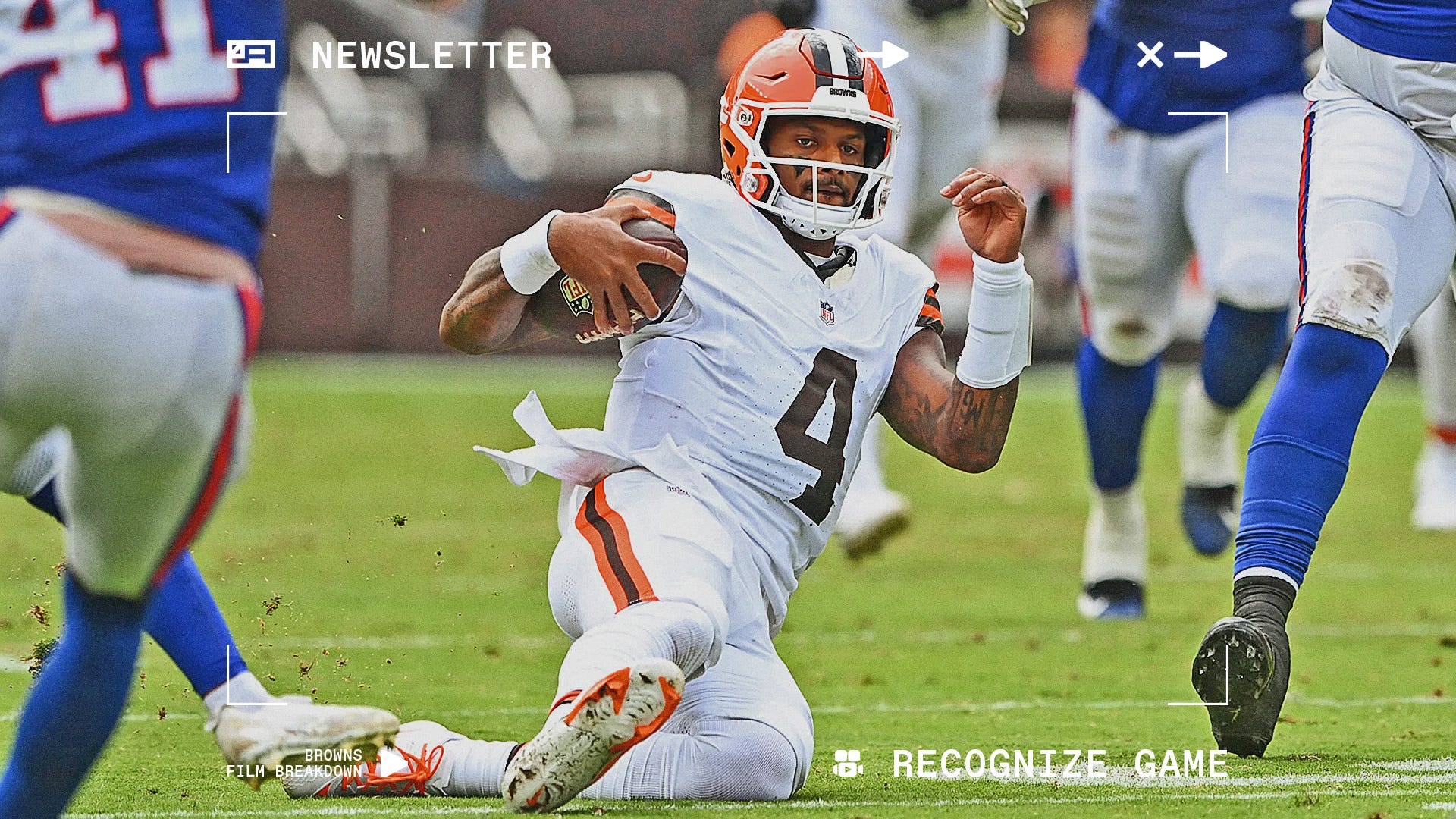
The self-inflicted damage here isn’t really about the boos themselves — plenty of players get booed and shrug it off. It’s that Watson chose a moment when he’s fighting for his job to make the story about how Cleveland treats him rather than about football. Shedeur Sanders, his direct competition for the starting role, handled the same question with more discipline and actually came across more sympathetic to Watson’s situation than Watson did to himself, saying he didn’t appreciate the booing directed at a teammate and framing it as a respect issue rather than making it personal. When your competitor sounds more like the bigger man in a press conference about you, that’s not a neutral outcome.
What Watson doesn’t understand is the baggage this fanbase carriers. That they watched the front office jeopradize their future for him. And what Watson can’t see is past his own ego. When Watson helped the Browns come back in Baltimore for an upset with in that 2023 season, there were no boos in the crowd surrounding him then. He had many believing he had turned a corner. There was support. The boos are not personal. They are directed at poor play, by a player who brought a Titanic ship worth of baggage to Cleveland, and who has done nothing but pass ownership of his failures to other places. They blame the organization for lying to them about what Watson can and cannot accomplish on the field and having to bear the brunt of watching him flounder around their home field. Eventually enough is enough and the salary cap shouldn’t stand in the way of the relationships between the organization and it’s fans and the relationship between the fans and their players.
None of this happens in a vacuum. It compounds a public narrative that’s already skeptical of Watson, and it hands Monken one more variable to weigh as he approaches naming a starter for the September 13th opener in Jacksonville. Monken has been careful all camp not to tip his hand, but a head coach evaluating “is this guy mentally built for a division of critical fans and a tough building” now has fresh tape of his incumbent quarterback publicly relitigating a boo instead of just answering the question and moving on.
Here’s the part that makes all of this more complicated than a simple “bench him” reaction, though: benching Watson and moving on from him are two entirely different propositions, and the cap situation is the reason.
After this spring’s restructure, Watson carries a 2026 cap hit of roughly $41 million, but that number is almost irrelevant to the release conversation because of what’s sitting behind it. Cutting him this year — even after June 1 — would not save the Browns a dollar against the cap. The dead money attached to his contract, spread across void years that now stretch out to 2030 as a result of four separate restructures, is simply too large relative to what’s already guaranteed. Every restructure the Browns have done to create short-term cap flexibility has pushed that reckoning further out and made it bigger, not smaller. Earlier reporting this offseason had a pre-June 1 release costing Cleveland north of $130 million in dead cap, a mark that would have been the largest dead-money charge in NFL history. A post-June 1 designation is more palatable relatively speaking but still doesn’t create room this year and actually accelerates different cap charges into the 2027 fold the Browns do not want, obviously. Since the guaranteed money left on the deal was already fully vested well before this season they have to deal with the situation in 2026.
That’s the trap. This isn’t a case of a team protecting a bad decision out of stubbornness — it’s a mechanical reality of how fully guaranteed contracts and restructures interact with the cap. Every dollar the Browns have saved in cap space over the last several years by converting Watson’s salary into signing bonus and adding void years bought them short-term flexibility at the cost of long-term exit options. They are, in the most literal sense, better off financially rostering Watson and even benching him than releasing him, regardless of how this competition or this season plays out. But they cannot just do that alone. They have to end the competition and keep Watson lingering around the organization on the 53-man roster playing a pseudo “practice safety” role that the Texans had him occupying in the 2020 season. It’s ugly, but it’s the only way this ends. Continuing the facade of Watson being on the roster and in the fold is not suitable for the damage he just caused and the team shouldn’t have to answer questions about him week in and week out.
So the Browns are stuck holding a quarterback who, by his own comments Saturday, seems more focused on how the fan base treats him than on winning back a locker room and a building that has legitimate reasons for skepticism. Whether Monken starts him or Sanders in Jacksonville, Watson very likely isn’t going anywhere in 2026. The only real decision left is whether he’s on the field creating more of these dreadful moments, or on the bench watching someone else try to erase his failures.
Browns Film Breakdown will return soon with more fresh content.
